

In Scandinavian countries, darkness falls at three in the afternoon by November. In Central Europe, cities shroud themselves in grey fog, and heating bills show increasingly alarming figures. This is when many dream of simply packing up and moving for a few months to somewhere the sun still shines and you can stroll along the beach without a winter coat. Over the past decade, this dream has become reality for more and more European retirees – thanks to the Canary Islands, especially Tenerife.
The Island of Eternal Spring Beckons Even in Winter
While continental Europe battles the cold from November to March, Tenerife continues to offer temperatures of 20-25 degrees Celsius with sunny days and pleasant sea breezes. This isn’t just weather data – it’s quality of life. The so-called “snowbirds,” or winter migratory birds, are looking for exactly this: a place where they can spend four to five months without giving up comfort, European living standards, or even their favorite Scandinavian newspaper, which is available in local supermarkets.
Tenerife’s popularity among winter residents is no accident. The island is not only geographically close to Europe – just a four-hour flight – but also remains culturally familiar. It’s part of Spain, so European Union rules apply, which means significant ease in terms of paperwork. At the same time, it’s exotic enough to bring real change to everyday life.
Why Tenerife? The Numbers Speak for Themselves
Among the European retiree community, Tenerife has become one of the most sought-after winter destinations. Thousands of German, British, Scandinavian, and Dutch retirees relocate year after year for the winter months. Practical reasons drive this choice: living costs are lower than in Northern Europe, while the standard of living remains high.
Scandinavian retirees choose the island in particularly large numbers, and the explanation is simple: winter depression, lack of sunlight, and harsh weather can cause serious health problems for the older generation. Vitamin D deficiency, joint problems, and respiratory illnesses are all more common during cold, damp winters. On Tenerife, these problems are minimized – the sunshine and mild climate act as natural remedies.
But it’s not just about the weather. Retirees appreciate that the island already has infrastructure tailored to their needs: English and German-speaking doctors, international communities, cultural programs, and excellent transportation networks. All of this in an environment that is safe, peaceful, and yet vibrant.
Long-Term Rentals: Finding Your Winter Home
The foundation of a winter relocation is a good apartment or house where you can comfortably spend five to six months. Fortunately, on Tenerife, there’s a well-established long-term winter rental market, and landlords are happy to rent out properties from December to the end of March, as this also means stable income for them.
Most snowbirds choose the southern part of the island: Los Cristianos, Costa Adeje, or Playa de las Américas, where the climate is most stable and the number of sunny days is highest. These towns offer the perfect balance between tranquility and life: there are beaches, promenades, restaurants, supermarkets, but they’re not too noisy or crowded in winter.
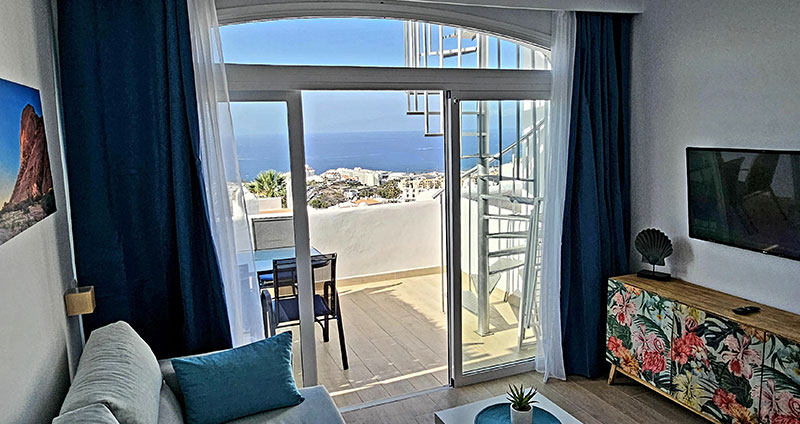
Rental prices vary widely. A simple but clean and well-equipped one-bedroom apartment can be found for 700-900 euros per month, while a larger, modern apartment in a complex with a pool can cost 1200-1500 euros. Prices typically include some or all utilities, but it’s always worth clarifying this in advance.
Most winter renters complete their bookings in September or October, ensuring the best selection. Many landlords prefer returning guests who come to the same apartment year after year – this is a convenient and secure solution for both parties.
Utilities and Living Costs: Is It Really Worth It?
One of the most common questions among retirees considering a winter move is: is it really cheaper to live in Tenerife than at home? The answer is usually yes, but it’s worth examining the details.
Utility costs in Tenerife are surprisingly low in winter. Heating is almost never needed – at most an occasional electric heater on cooler evenings. Electricity and water bills together typically run around 50-80 euros per month, which is a fraction of Northern European winter heating bills. Internet and mobile services are also available at affordable prices, around 30-50 euros per month.
Food prices show a mixed picture. Local products – fresh fruits, vegetables, fish – are often cheaper than in Northern Europe, and the quality is excellent. Spanish markets on Thursdays and Sundays offer fresh produce. Large supermarket chains like Mercadona or Lidl also offer competitive prices. However, those looking for familiar imported Scandinavian or British products will have to pay a bit more for them.
Eating out can be surprisingly affordable. A full lunch menu with wine or beer can be had for 10-15 euros at local restaurants. Coffee culture is also more affordable: a coffee costs 1.5-2 euros, while in the North it can be double that.
Overall, a European retiree can live comfortably on Tenerife for an average of 1500-2000 euros per month, including accommodation, utilities, food, and occasional entertainment. In many cases, this is less or the same as what would be needed at home – but with much better quality of life.
Healthcare: Safe with Medical Services
One of the most important considerations for a winter relocation is the availability and quality of healthcare. Tenerife presents a reassuring picture in this regard too. The island has excellent healthcare infrastructure, with modern hospitals, well-equipped private clinics, and doctors who speak English or German.
As a European Union citizen, the Spanish public healthcare system is also accessible with the European Health Insurance Card (EHIC), which provides emergency care. However, most snowbirds prefer to take out private health insurance, which guarantees comprehensive care and faster access. For a person over 60-70 years old, comprehensive insurance costs around 1000-1500 euros per year, including outpatient care, laboratory tests, and necessary medications.
Pharmacies are widely available, and many medications are available without prescription. Prices are generally lower than in Northern Europe. Most doctors are experienced and used to working with foreign patients, so they know how to communicate clearly and coordinate treatment with the patient and their doctor at home.
Community Life: You Don’t Have to Be Alone
One of the biggest fears about winter relocation can be the feeling of loneliness and isolation. However, this is not an issue at all on Tenerife. The island has a vibrant international community, specifically for winter guests as well.
Scandinavian clubs, German cultural associations, British social groups are all active during the winter season. They organize regular programs: hikes, beach walks, gastronomic evenings, concerts, and language courses. These events are easy to find in newspapers and online forums, and they’re extremely friendly communities that welcome new faces.
Age-appropriate hobby clubs are also popular: for example, golf societies, cycling groups, yoga and Pilates classes, or even painting and photography circles. Local libraries also have English and German language books available, and they regularly hold book clubs.
For those who want to practice Spanish, there are countless opportunities. Language courses, conversational cafés where you can chat with locals – these all help with integration and building deeper connections.
Administrative Tasks: Paperwork Made Simple
The administrative side of a winter move is not complicated at all, but there are a few things worth arranging in advance. Citizens of the European Union don’t need a visa and can stay on the island for up to three months without any formalities. If someone wants to spend more time there, it’s worth registering with local authorities, which is a simple procedure.
Obtaining a NIE number (Número de Identificación de Extranjero), or foreigner identification number, can be useful if someone is planning for the longer term or wants to sign contracts (such as internet, phone). The NIE number can be requested at the local police station or relevant offices, and it’s issued within a few weeks.
Banking is also simple: many European banks are represented on Tenerife, and it’s easy to open a bank account locally if someone finds that more convenient. However, online banking is now so advanced that many simply use their home account on the island as well.
It’s important that in the case of a long-term rental, the lease agreement is in order and all essential conditions are clarified: rent, utilities, deposit amount, and cancellation terms. Most landlords handle these professionally, but caution never hurts.
When Spring Comes: Returning Home or… Staying?
Most snowbirds return home at the end of March or early April when the weather in Europe also turns warmer. However, many book the next winter season in the same apartment before their return journey, because they’ve gotten hooked on the eternal spring lifestyle. And there are those who eventually decide to relocate permanently – they’ve realized during their trial half-year that this lifestyle suits them.
Winter relocation to Tenerife is not just a weather escape, but a lifestyle choice. It’s an opportunity for those who have already earned their rest and more pleasant living conditions to spend their later years actively, healthily, in community, and in sunshine. The fact that all this is just a few hours’ flight from home only makes the opportunity more attractive.
The snowbird lifestyle on Tenerife is not a luxury – it’s accessible, practical, and endlessly enjoyable. An adventure that many dream of, but those who take the first step quickly realize: this is not a dream, but an achievable reality.
Book accommodation in one of our apartments and set out to discover Tenerife. Find more ideas on our Pinterest page!